Two Years With KEF Q150s
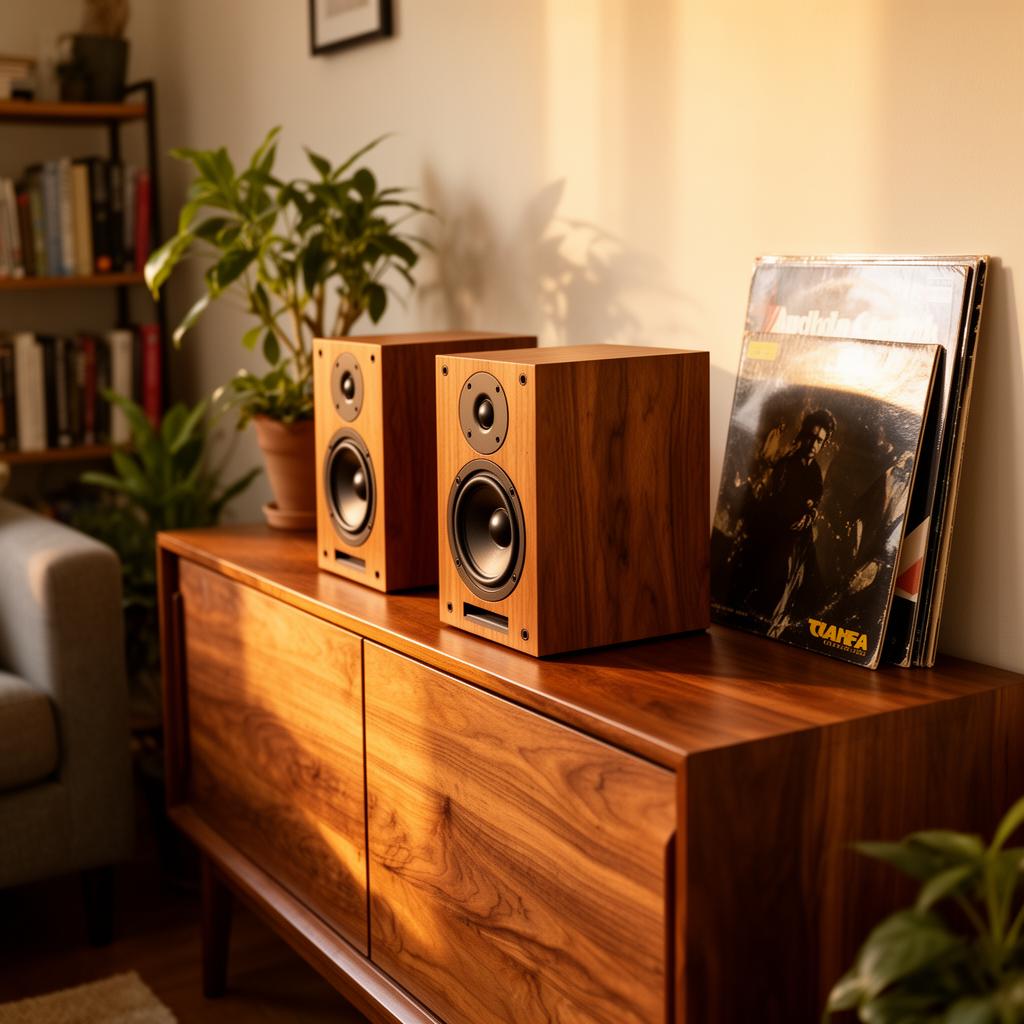
An entry-level audiophile bookshelf that has remained our critic's main listening pair.
How this piece was assessed
- Format
- Long-term review
- Reviewed by
- Theo Marchetti — Audio Critic
- Fact-checked by
- Marcus Bell — Senior Editor, Electronics
- Evaluation
- Real-world use over months or years. Hearthline does not lab-test or instrument-bench products. Read our methodology.
- Review date
- 26 February 2024
- Last reviewed
- 2026-02-30
A pair of bookshelf speakers is a long-term proposition.
Our critic has used the Q150s as his main listening pair for two years, on a modest integrated amp in a treated room.
We first published this piece in February 2024 and have revisited the recommendation through 2026-02-30. What follows reflects what survived that review window — the observations we still stand behind, the caveats worth knowing before purchase, and the small ways the piece has aged in ordinary use.
The summary
Bookshelf speakers at the affordable end of audiophile pricing fluctuate in quality. The KEF Q150 has remained, after two years, the most defensible recommendation in its price class.
In its favour
- Uni-Q coaxial driver creates a focused stereo image.
- Tonal balance is honest rather than flattering.
- Box construction is acoustically inert at this price.
Where it falls short
- Require breathing space behind them — not a wall-shelf speaker.
- Need a real amp; AV-receiver synergy is mediocre.
- Bass extends honestly to ~50Hz; a subwoofer is welcome below that.
Who it's for
- — Small to medium listening rooms.
- — Listeners who prefer clarity to warmth.
- — Pairing with a clean 50W class-AB amp.
Who should skip it
- — You need wall-mountable speakers.
- — You listen primarily to bass-led genres without a subwoofer.
Buying guidance
- Plan stands at tweeter-height for your seated listening position.
- Toe-in gently; the Uni-Q drivers reward careful placement.
- Pair with a sub for film, not necessarily for music.
- Plan for the trade-off most new owners only notice in the second month: require breathing space behind them — not a wall-shelf speaker. It is workable, but it is easier to design around at the point of purchase than to discover afterwards.
- Take the second caveat above seriously when comparing across price tiers — need a real amp; av-receiver synergy is mediocre. The cheaper alternatives in the category usually share the same limitation, so paying more rarely solves it.
Alternatives we considered
Wharfedale Diamond 12.1
Warmer balance; less precise imaging.
ELAC Debut 2.0 B6.2
Bigger box, more bass, less refined.
Reader questions
- Do I need an audiophile amp?
- Any clean 30–80W class-AB amplifier will do. The Q150 is not amp-fussy.
- How does KEF Q150 Bookshelf Speakers (Pair) hold up over time?
- 2 years of ownership has produced no failures we would consider disqualifying. The wear patterns are visible — that is true of anything used daily — but the piece continues to do the work we bought it for. We last revisited the recommendation on 2026-02-30, and the verdict held.
- What maintenance does it actually need?
- Most of the upkeep is preventative rather than corrective. Follow the manufacturer's care notes for the first six months; after that, the routine you settle into matters more than the one printed on the box. The "Where it falls short" column above flags the specific points worth being attentive to.
- Is it worth the price compared with cheaper options?
- Sometimes. The alternatives section above lists the genuine contenders, not lookalikes. The cheaper options are not bad — they are different trade-offs. If the strengths in the "In its favour" column matter to your use, the price gap is usually justified; if they do not, the cheaper alternative is the right call.
Editorial verdict
Still the recommendation we make most often at this price. The Q150 will outgrow most readers' rooms before it disappoints them.
Update history
- 2026-04-10Editorial maintenance pass: cross-checked alternatives for stock status, validated FAQ against current reader correspondence, and re-confirmed recommendation with the desk editor.
- 2026-02-30Reviewer revisited the recommendation against current alternatives; the verdict held with minor copy refinements.
- 2025-02-27Short check-in revisit; no changes to the verdict, two minor copy corrections logged.
- 2024-02-26Initial publication after the reviewer's testing window concluded.
Written by
Theo MarchettiAudio Critic
Theo is a former mastering engineer. He covers headphones, speakers, and listening rooms — and writes about audio without resorting to mysticism.
Edited & fact-checked by
Marcus BellSenior Editor, Electronics
Marcus has covered consumer electronics for fifteen years, with bylines previously in trade engineering publications. He distrusts launch hype and tests against his own benchmarks.
Related reading
From the same shelf
Eighteen Months With the Sony WH-1000XM5
Our audio critic spent a year and a half with Sony's flagship noise-cancelling headphones — on planes, in offices, and at a writing desk. The verdict is mixed in interesting ways.