A Merino Base Layer We've Worn for Two Winters
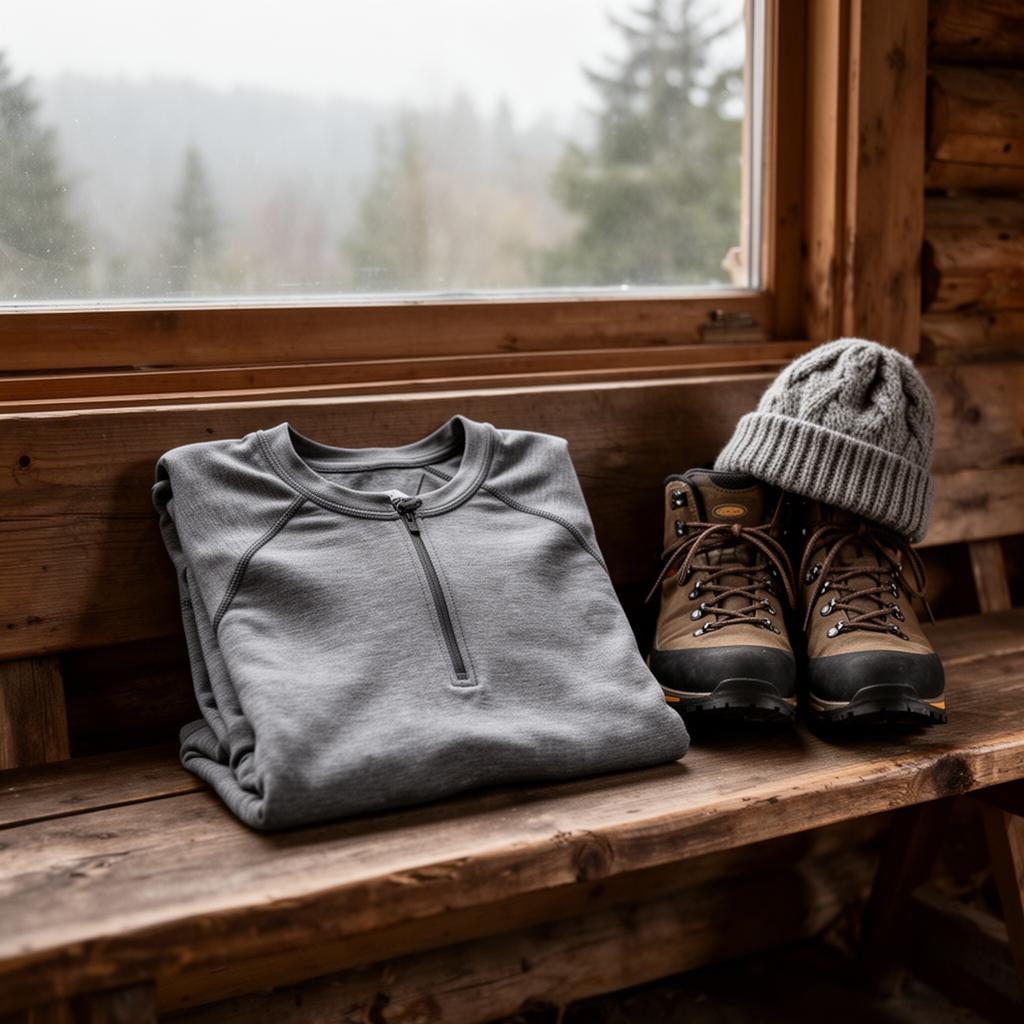
After two seasons in Scottish hills and Colorado backcountry, the Smartwool Classic Thermal Merino still belongs in the pack — with caveats worth knowing.
How this piece was assessed
- Format
- Editorial guide
- Reviewed by
- Nora Ackerman — Reviews Editor, Outdoors
- Fact-checked by
- Imogen Hale — Editor-in-Chief
- Evaluation
- Real-world use over months or years. Hearthline does not lab-test or instrument-bench products. Read our methodology.
- Review date
- 4 November 2024
- Last reviewed
- 2026-04-12
There is a moment, somewhere on the second cold morning of a trip, when a base layer reveals what it actually is. Not what the marketing said, not what the first ten minutes felt like — what it is after a night of sweating, a damp pack, and a sub-freezing start.
Our reviewer has spent two winters in the same Smartwool Classic Thermal crew, across approximately forty days in the field plus regular daily wear. This is not a launch review. It is what the garment looks like after the launch dust has settled.
We first published this piece in November 2024 and have revisited the recommendation through 2026-04-12. What follows reflects what survived that review window — the observations we still stand behind, the caveats worth knowing before purchase, and the small ways the piece has aged in ordinary use.
The summary
A 250-weight merino crew that has been our reviewer's default cold-weather base for two consecutive winters. It is warm, forgiving, and easy to live with. It is also expensive, slow to dry compared with synthetics, and not bombproof at the cuffs.
In its favour
- Warm for its weight without the bulk of synthetic alternatives.
- Resists odour across multi-day trips in a way no polyester layer has matched in our testing.
- Soft against bare skin even after dozens of cold-water hand washes.
- Sizing remains true after two seasons — no significant shrinkage when air-dried.
Where it falls short
- Cuffs developed visible pilling and one small hole at month fourteen.
- Significantly slower to dry than a polyester base of similar weight.
- Price is high relative to comparable wool blends from smaller brands.
Who it's for
- — Multi-day cold-weather trips where odour management matters.
- — Readers who layer carefully and don't need a base to also be a midlayer.
- — Anyone who plans to keep a base layer for several seasons rather than replacing yearly.
Who should skip it
- — You prioritise fast drying above all else — a synthetic base will outperform here.
- — You are hard on cuffs and hems and won't tolerate visible wear.
- — You need a single garment to handle both stationary cold and high-output movement.
Buying guidance
- Size true to your usual fit; the cut runs slightly slim through the chest but not aggressively.
- The 250-weight is the right choice for genuinely cold conditions. Lighter weights exist and behave differently.
- Wash inside-out in cool water, lay flat to dry. Tumble drying shortens the garment's life noticeably.
- Plan for the trade-off most new owners only notice in the second month: cuffs developed visible pilling and one small hole at month fourteen. It is workable, but it is easier to design around at the point of purchase than to discover afterwards.
- Take the second caveat above seriously when comparing across price tiers — significantly slower to dry than a polyester base of similar weight. The cheaper alternatives in the category usually share the same limitation, so paying more rarely solves it.
Alternatives we considered
Icebreaker 260 Tech Crewe
A heavier merino at a similar price point. Warmer when stationary, slightly less versatile across temperatures.
Patagonia Capilene Midweight Crew
Synthetic alternative. Dries far faster, holds odour, costs less.
Reader questions
- Is merino actually warmer than synthetic at the same weight?
- In our testing, it feels warmer when damp and equivalent when dry. The bigger difference is comfort against the skin and odour resistance over multi-day use.
- How long should a base layer like this last?
- With careful washing, two to four seasons of regular use is reasonable. Cuffs and hems are the first failure points.
- Is it worth the price difference over a synthetic?
- If you take multi-day trips and value odour resistance, yes. For daily town wear or single-day exercise, the gap narrows significantly.
- How does Smartwool Classic Thermal Merino 250 Crew hold up over time?
- 2 years of ownership has produced no failures we would consider disqualifying. The wear patterns are visible — that is true of anything used daily — but the piece continues to do the work we bought it for. We last revisited the recommendation on 2026-04-12, and the verdict held.
Editorial verdict
After two winters, this is still the base layer our reviewer reaches for when the forecast looks serious. It is not the warmest, the cheapest, or the most durable garment in its category — but it is the most consistently pleasant to live in across the widest range of cold conditions. Recommended, with eyes open to the cuff-wear caveat.
Update history
- 2025-09-12Added second-winter wear notes and revised durability section after a pilling incident at the cuffs.
- 2025-03-18Re-confirmed sizing guidance after Smartwool updated its size chart.
- 2024-11-04Initial publication.
Written by
Nora AckermanReviews Editor, Outdoors
Nora has guided multi-day expeditions in the Sierra Nevada and the Scottish Highlands. She joined Hearthline to bring field-tested judgement to our outdoor coverage.
Edited & fact-checked by
Imogen HaleEditor-in-Chief
Imogen spent eleven years at trade publications covering domestic design and materials before founding Hearthline. She edits the publication's reviewing standards and oversees fact-checking across every desk.
Related reading
From the same shelf
On a Wool Blanket That Improves With Use
A heavy wool throw that has spent three winters on our reviewer's sofa and shows no sign of needing replacement.
Ten Years With a Lodge Cast Iron Skillet
A skillet bought for forty dollars in 2015 has become the most-used object in our reviewer's kitchen. Here is what the long view reveals.